 Skip to content


Canoa Manabita: A Traditional Dish from Ecuador’s Manabí Region
When exploring Ecuadorian food, some dishes deserve more attention than they usually get. Canoa Manabita is definitely one of them!
This traditional coastal dish brings together ripe plantain, savory fillings, cheese sauce, and a special local seasoning. It is a delicious example of the creativity behind Ecuadorian cuisine.
We love discovering traditional dishes wherever we travel in Ecuador. Sometimes, the best food discoveries happen when you spot something unfamiliar on a menu.
That was exactly how we discovered Canoa Manabita. We couldn’t resist ordering it!
If you enjoy exploring destinations through their food, this Ecuadorian specialty deserves a place on your culinary bucket list.

Planning your visit to Ecuador?
Check out our 2-week itinerary for the ultimate guide to exploring Ecuador. Don’t miss the breathtaking Galapagos Islands, where you can experience unparalleled natural beauty on a luxury cruise or an unforgettable budget-friendly adventure.
Booking a tour to enjoy the amazing Galapagos Islands is possible! I decided to bring that magic to you by joining an amazing tour operator. By filling out this form I will be able to start working on your perfect trip to the Galapagos Islands.
What Is Canoa Manabita?
Canoa Manabita, also known as canoa de plátano maduro, is a traditional dish from Ecuador’s coastal region. It is particularly associated with Manabí, a province famous for its rich culinary traditions.
The name comes from its shape. A ripe plantain is prepared to resemble a small canoe, creating a natural space for its filling.
The plantain is cooked until tender and used as the base of the dish. It is then filled with savory ingredients such as meat, chicharrón, longaniza, or lomo.
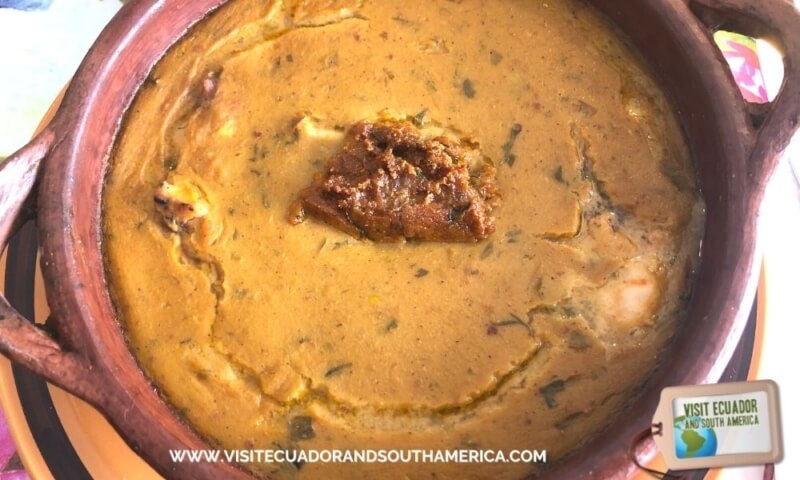
To finish, the canoa receives a generous topping of cheese sauce and traditional salprieta.
The combination brings together sweet, savory, and slightly salty flavors. The ripe plantain provides a natural sweetness, while the filling and toppings add richness.
It is a wonderful example of how simple local ingredients can become something special.
 If you are in South America, I would love to see your pictures.
The Origins of Canoa Manabita: A Taste of Manabí
Manabí is one of Ecuador’s most interesting food destinations. Its cuisine reflects the region’s agricultural traditions, coastal location, and local ingredients.
Plantains, peanuts, corn, seafood, and fresh herbs play important roles in traditional Manabí cooking.
Canoa Manabita celebrates one of the region’s most familiar ingredients: the ripe plantain.
Plantains are an essential part of Ecuadorian cuisine. They appear in many forms, from fried maduros and bolones to empanadas and other traditional preparations.
Another important element is salprieta. This traditional Manabí preparation combines toasted and ground peanuts with corn and seasonings.
Salprieta adds a distinctive nutty flavor to many local dishes. It is also enjoyed with plantains and other traditional foods.
Together, the ingredients give Canoa Manabita its characteristic coastal identity.

Our Experience Discovering Canoa Manabita in Ecuador
We discovered Canoa Manabita while looking through the menu at A Todo Bolón in Cumbayá, Ecuador.
We enjoy trying traditional Ecuadorian food, especially dishes we haven’t tasted before. So, when we spotted this one, ordering it was an easy decision!
The name caught our attention, and we wanted to discover what this traditional Manabí dish was all about.
We love these little food discoveries. They give us another reason to explore Ecuador’s gastronomy beyond the dishes we already know.
For us, discovering local food is part of traveling. It is also a great way to learn more about the different regions and traditions of a country.
Canoa Manabita reminded us that Ecuadorian cuisine has plenty of delicious surprises waiting to be discovered.
And that’s exactly why we enjoy sharing these traditional food discoveries with our readers!


A Little About the Ingredients and Preparation
Canoa Manabita is built around a few important ingredients. The main one is ripe plantain, which provides the sweet base and canoe-like shape.
Depending on the preparation, the filling can include meat, chicharrón, longaniza, or lomo. Cheese sauce adds a creamy topping, while salprieta provides the characteristic peanut and corn flavor.
How is it prepared?
The ripe plantain is cooked and shaped or opened lengthwise to create a canoe. The chosen savory filling is prepared separately and placed inside. The dish is then finished with cheese sauce and a topping of salprieta. Exact preparation methods and fillings can vary between cooks and restaurants.
This is a simple overview rather than a definitive regional recipe. The best way to appreciate the dish is to taste the different versions available.

Visit Ecuador and Discover Its Regional Cuisine
Ecuador may be a small country, but its culinary diversity is impressive.
From the traditional dishes of Manabí to the flavors of the Andes and the Amazon, every region has something different to offer.
If you are planning a trip, make room for local food experiences. Visit traditional restaurants, explore markets, and ask about the dishes people grew up eating.
Don’t just visit Ecuador for its landscapes. Discover its culture through its food, too!Man
What Other Traditional Ecuadorian Dishes Should You Try?
If canoa sounds interesting, keep exploring Ecuador’s traditional cuisine. The country offers plenty of dishes for adventurous food lovers.
One famous option is corviche and another that is my husband’s favorite is cazuela.
Each dish offers a different taste of Ecuador’s regional cooking.
I believe food is one of the most enjoyable ways to explore a country. You do not need to love every dish to appreciate the culture behind it.
So, when you visit Ecuador, be curious, ask questions, and try something new. You might discover a favorite dish in the most unexpected place!
Don’t Stop There—Taste More!
Guaguas de pan and colada morada are just two of many must-try dishes from Ecuador’s highlands.
While you’re there, be sure to taste humitas, tamales, and locro de papa.
These dishes are rich in history, flavor, and comfort.
We’ve also created a guide to the top 10 traditional food to taste while in Ecuador—you can check it here.
Best Day Tours in and from Ecuador
Want to explore Ecuador beyond the food? Try these top-rated GetYourGuide tours:
Culinary Day Tours You Shouldn’t Miss
Want to experience Ecuador’s food culture first-hand?
These culinary tours in the Andes are unforgettable:
1. What is Canoa Manabita?
2. Where does Canoa Manabita come from?
3. What ingredients are used in Canoa Manabita?
Taste, travel, and explore together—Ecuador is full of flavor and fun.
Ready to plan your trip? Let us know which dish is your favorite in the comments below.
Enjoy!
Some posts on this site contain affiliate links, meaning if you book or buy something through one of these links, I may earn a small commission (at no extra cost to you!).
If you enjoy the content, please consider liking, commenting, and subscribing. It’s free, and it helps us. Every little bit will help fund our travels and continue to bring great content to our site!
PIN IT FOR LATER


Don´t just dream it. Make it happen. Plan your South American trip with a local!
Take a look at this list of travel resources to plan your trip and travel in South America.
Daydreaming about your trip to South America? I share with you some useful tips & resources for a memorable trip! Order here your Free Ebook.
I invite you to follow me on Facebook, Twitter, Pinterest, and Instagram. In addition, you can subscribe on YouTube. You can also send me an email to get more information or help planning your trip: info(at) visitecuadorandsouthamerica(dot)com.


