Skip to content
Celebrate with Flavor in Ecuador: Guaguas de Pan and Colada Morada of Día de los Difuntos
Here in Ecuador, November 2nd marks Día de los Difuntos (All Saints’ and All Souls’ Day), a heartfelt celebration that blends indigenous traditions with deep cultural meaning. Across the country, families gather to honor loved ones who have passed, sharing food, memories, and connection. Two symbolic treats define this special day: guaguas de pan (bread babies) and colada morada, a warm, spiced purple-corn and berry drink. Together, they turn remembrance into a feast of flavor and tradition.
On our blog “Visit Ecuador and South America,” we’ve explored Ecuador’s food traditions in depth—see our feature on All Saints Day food traditions in Ecuador for even more context.
In this post, we’ll dive into the delicious bread babies: what they are, why they matter, how to eat them (and where to find them today), and how they link to colada morada. Whether you’re traveling, baking, or simply exploring Ecuadorian flavours, you’ll find plenty here to inspire.
Planning your visit to Ecuador?
Check out our 2-week itinerary for the ultimate guide to exploring Ecuador. Don’t miss the breathtaking Galapagos Islands, where you can experience unparalleled natural beauty on a luxury cruise or an unforgettable budget-friendly adventure.
Booking a tour to enjoy the amazing Galapagos Islands is possible! I decided to bring that magic to you by joining an amazing tour operator. By filling out this form I will be able to start working on your perfect trip to the Galapagos Islands.

What are Guaguas de Pan?
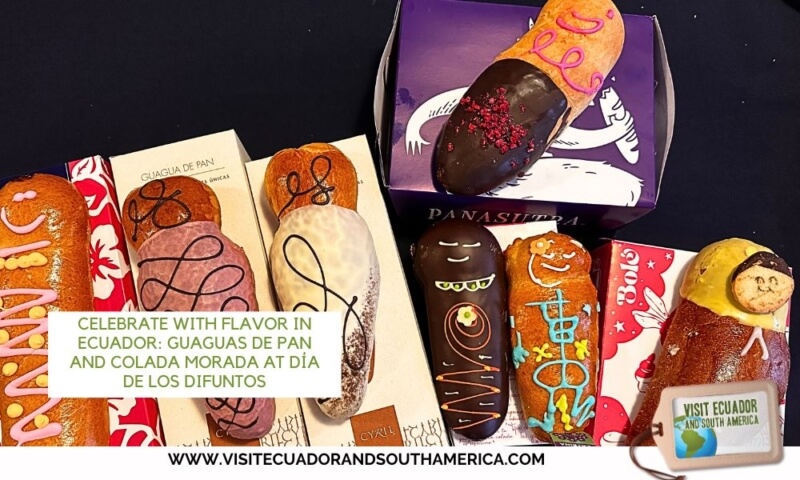
In Ecuador, the word guagua means “baby,” a term that comes from our Indigenous Kichwa roots. So, guaguas de pan are literally “bread babies” — sweet breads shaped like little figures, often decorated with bright icing or colorful dough.
They’re made from a rich, soft dough that includes butter, milk, and eggs, and in recent years, many bakeries have started adding delicious fillings like dulce de leche, chocolate, or fruit jams.
Traditionally enjoyed on November 2nd together with colada morada, these breads are much more than just a treat. They carry deep meaning, symbolizing the cycle of life and the connection between the living and those who have passed on — a beautiful blend of flavor, family, and remembrance
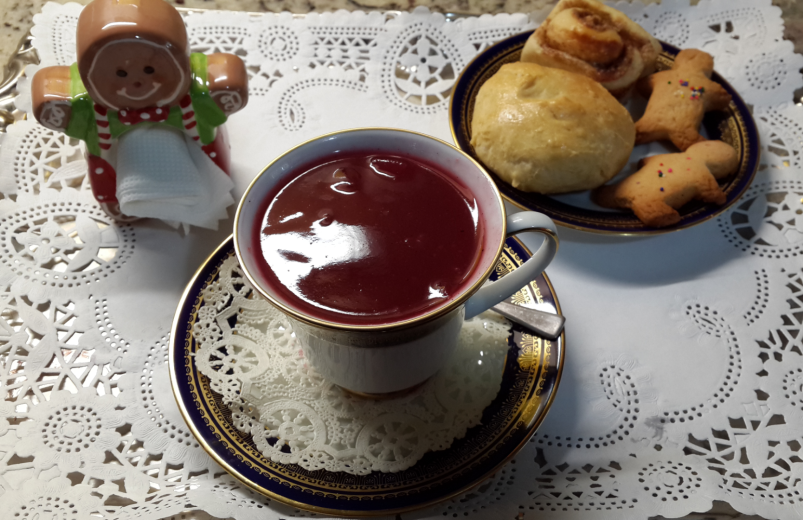
 If you are in South America, I would love to see your pictures.
History & Tradition Behind the Guaguas de Pan
The story of guaguas de pan goes back centuries, deep into the Andean highlands where it all began. Long before colonial times, Indigenous communities created small figures made from dough or grains to honor their loved ones who had passed away. These offerings were a heartfelt way to celebrate the cycle of life and to stay connected with ancestors during harvest time and remembrance rituals.
Over time, with the arrival of the Spanish and the influence of Catholic traditions such as All Saints’ and All Souls’ Day, this ancestral custom blended with new religious practices. The simple dough figures became more elaborate — shaped into baby forms, filled with sweet ingredients, and beautifully decorated. And of course, they found their perfect companion in colada morada, the warm, spiced purple drink that completes this special tradition.
Today, on Día de los Difuntos (November 2), Ecuadorian families continue to gather to share guaguas de pan and colada morada. Bakeries all over the country fill their windows with colorful, creative versions of these bread babies, and each bite connects us to our roots — a beautiful reminder of love, memory, and continuity between generations.
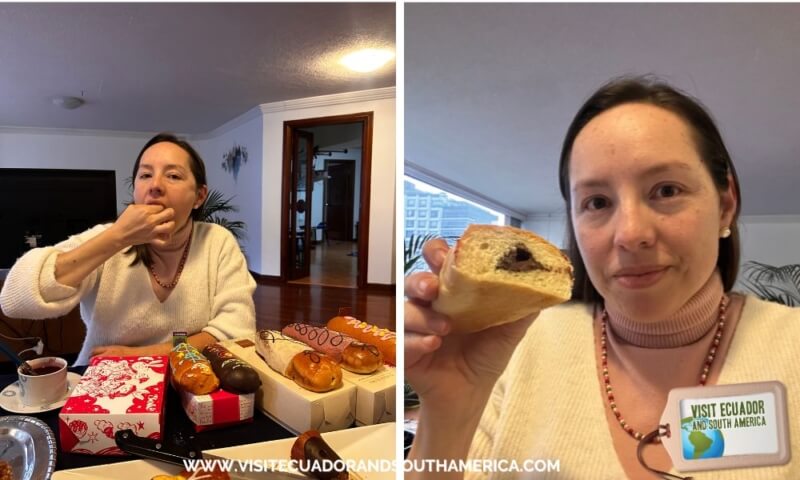
How to Eat (and Enjoy) Them — And Where to Find the Delicious Variations
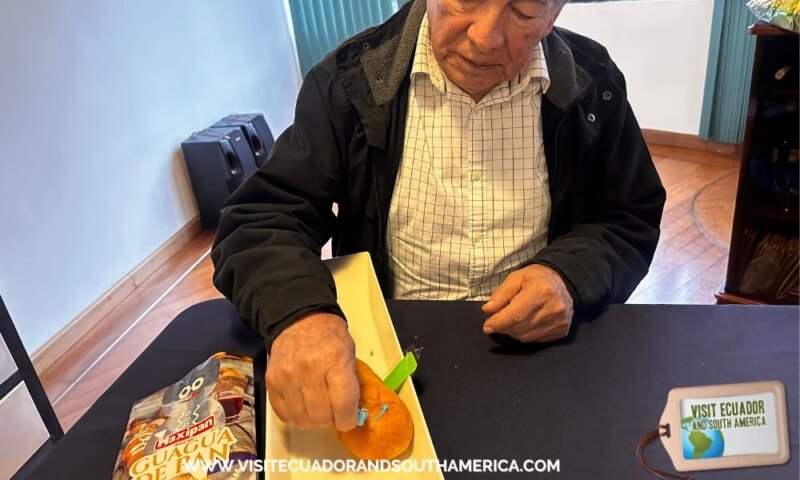
Eating guaguas de pan is as much about the moment as the flavour: you might share them with godchildren, bring them when visiting gravesites, or gather around the kitchen table with family and friends. They’re delicious warm, especially when paired with a cup of colada morada. laylita.com
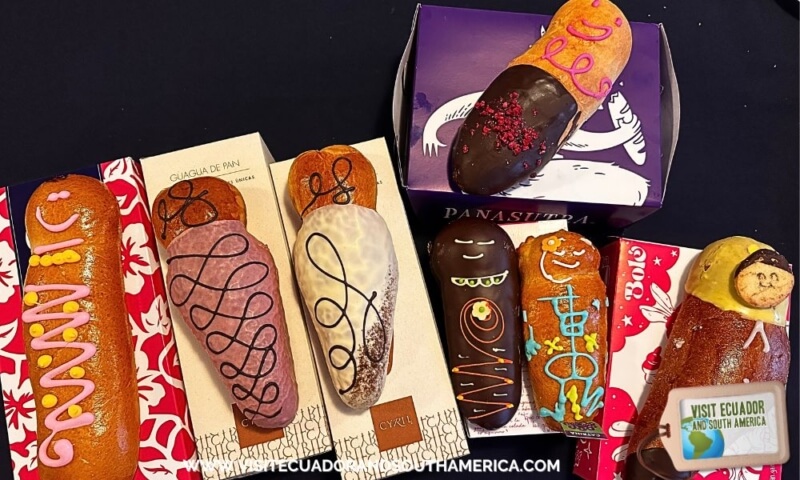
In modern Ecuador many panaderías take the tradition to new heights, offering filled guaguas with inventive, tasty fillings and coverings. For instance:
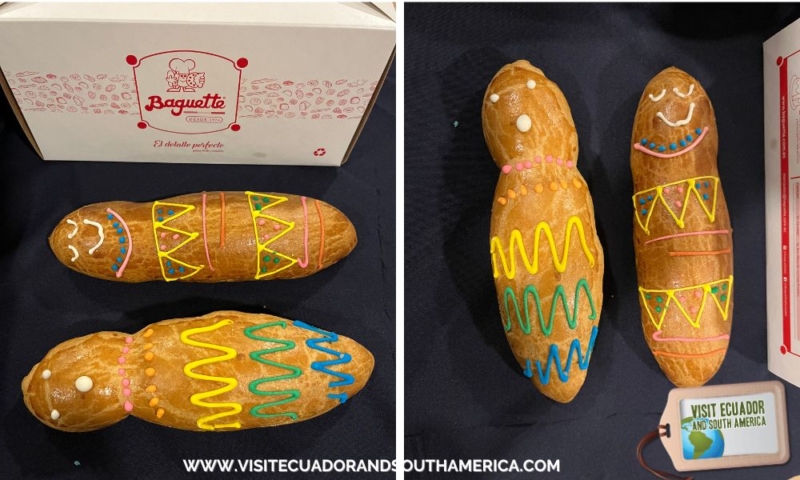
- Baguette has some tasty guaguas de pan, although we could not taste them, we have heard good things about their flavor.
-
From Pan de Ambato: a classic dulce de leche-filled version, rich and traditional. Tasty, dulce de leche never goes amiss.
-
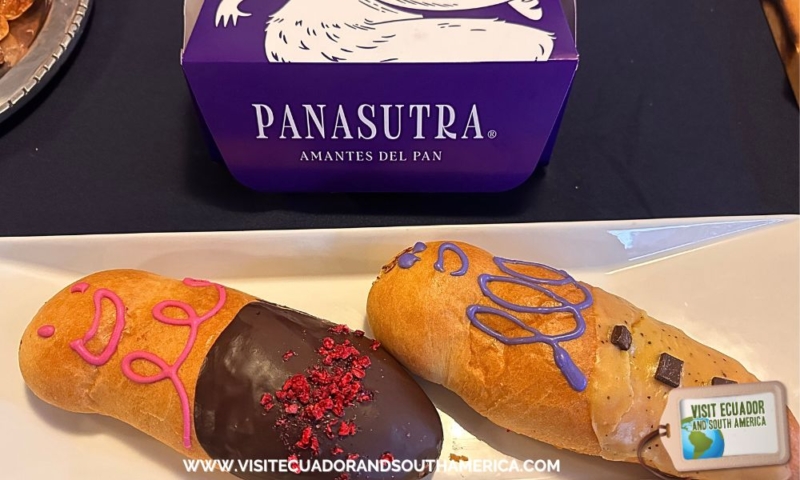
From Panasutra: their “golosa guagua” features choco-avellana filling (hazelnut chocolate) and a passion-fruit (maracuyá) glaze—decadent, playful, and perfect for couples or DINKs on the lookout for something fun. Despite the long lines, it was worth the wait. One of our favorite options! One of my favorites, I think, is the golosa guagua de pan.
-
From Cyrano Bakery: we tried their choco-avellana filled version, plus one called “morena” covered in chocolate and filled with maracuyá—acidity meets sweetness in a gourmet take. A few weeks ago, I discovered their app, which allowed me to pre-order the guaguas from the store closest to my home and simply pick them up — a great way to avoid long lines. Then my dad got the chocoavellana one, filled with chocolate, which was delicious!
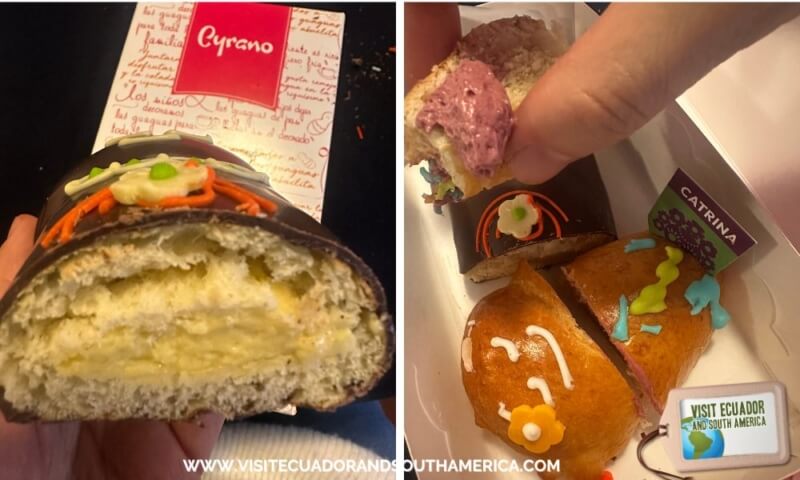
-
Also: Cyril Boutique’s “guagua fraise-rhubarbe” (strawberry-rhubarb jam filling, pink chocolate cover with dehydrated blackberry powder) and “guagua infiniment vanille” (natural vanilla-perfumed pastry cream inside, white 33%-cacao chocolate cover) were both standout. Although I really liked the infiniment vanille option the most.
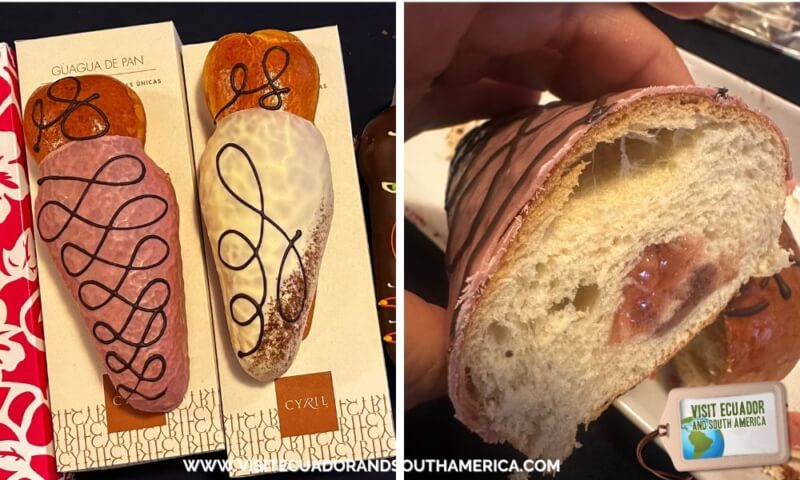
-
Another brand, Bole, offered interesting variants, and a week ago we sampled from Uko the fig-and-cheese filling version—surprising and sophisticated.
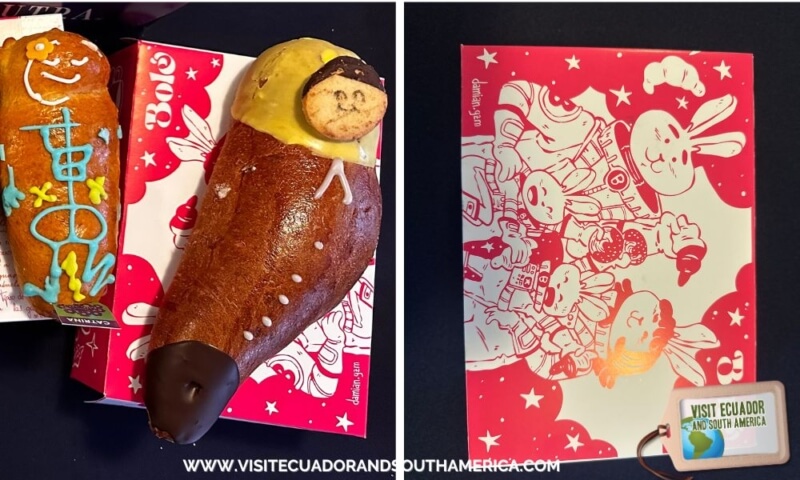
From Paccari we went for the classic with chocolate filling, and a new flavor that is the pistaccio one, both creamy and a very soft dough. So for my husband these guaguas were some of the best he tasted. These guaguas were the latest, so a few days later I decided I had to try a pistaccio flavored type.
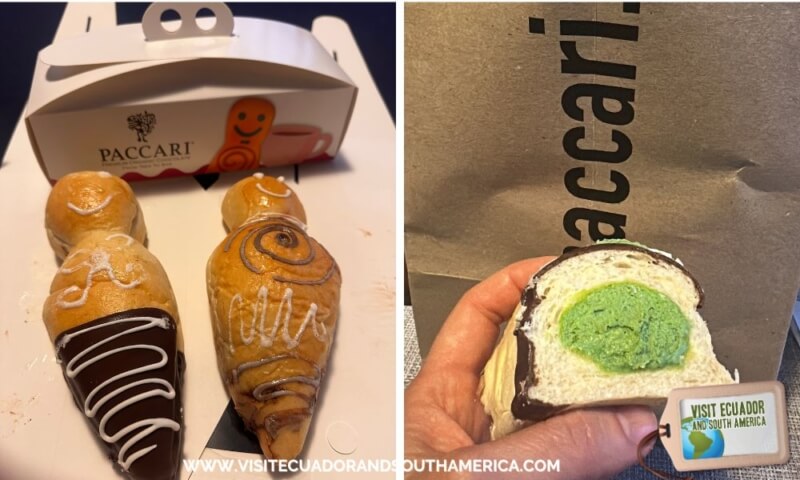
Many supermarkets (e.g., Supermaxi) also sell guaguas ready-made (with or without fillings) that you can even decorate yourself—a fun family activity.
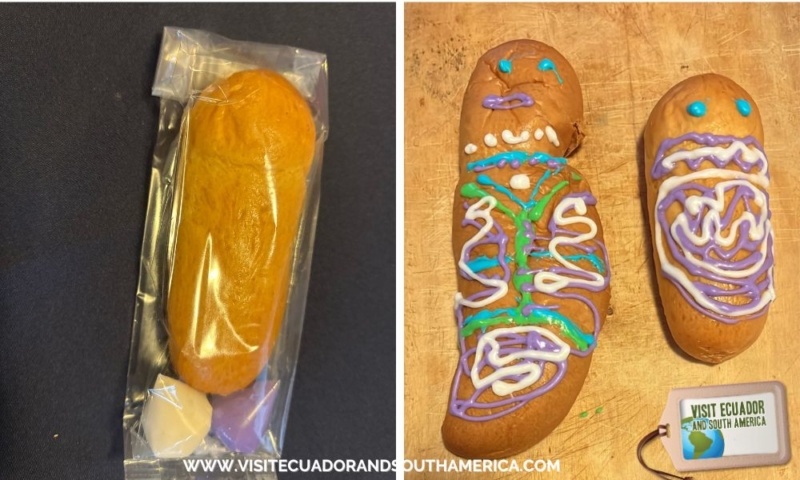
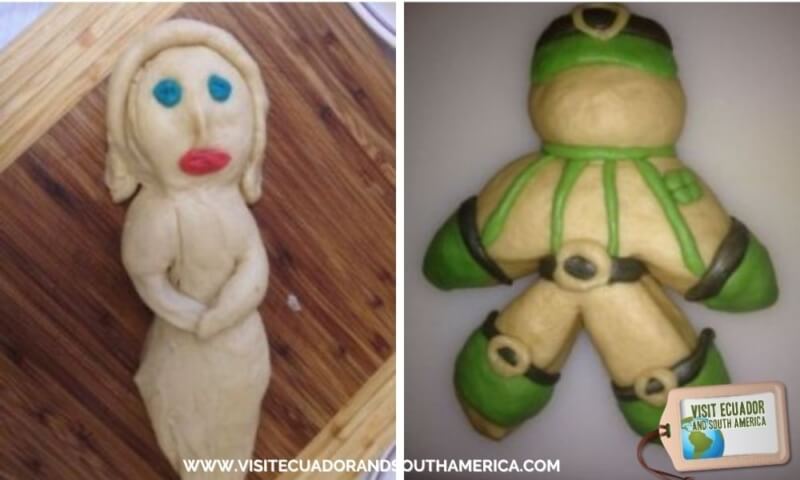
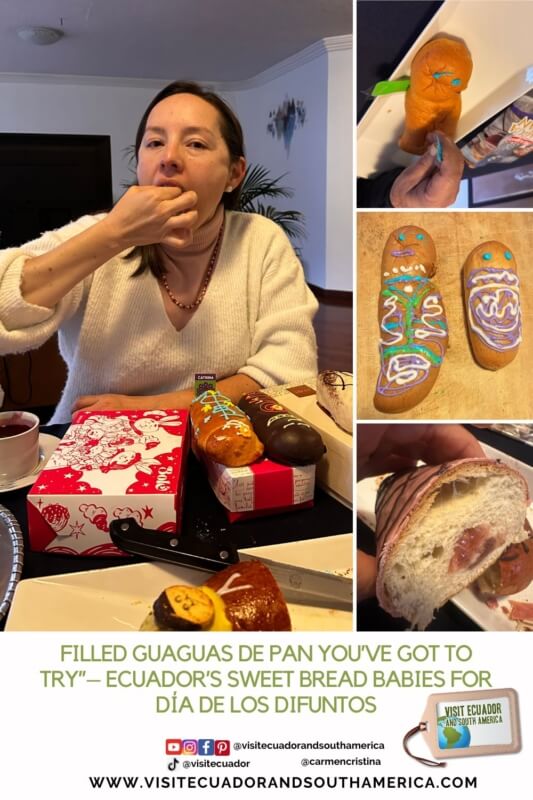
In the past (and still in some homes), families sit around the table and make their guaguas from scratch: kneading dough, shaping the “baby,” decorating, sharing the process—and the result. I haven’t done it in years, but here are some pics from the last time we tried.
A Sweet Connection to Pan de Muertos from Mexico
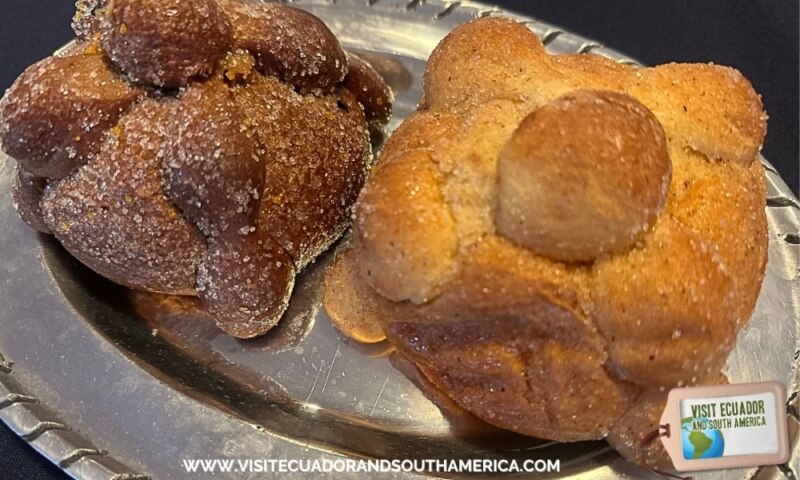
Ecuador’s guaguas de pan share a beautiful connection with Mexico’s pan de muertos. Both are special breads made to honor loved ones who have passed away. While pan de muertos is round and topped with sugar, guaguas de pan take the shape of little babies — a reflection of Ecuador’s Andean roots. Each represents the same spirit of remembrance and the joy of celebrating life through food and tradition.

The Drink That Completes the Duo: Colada Morada
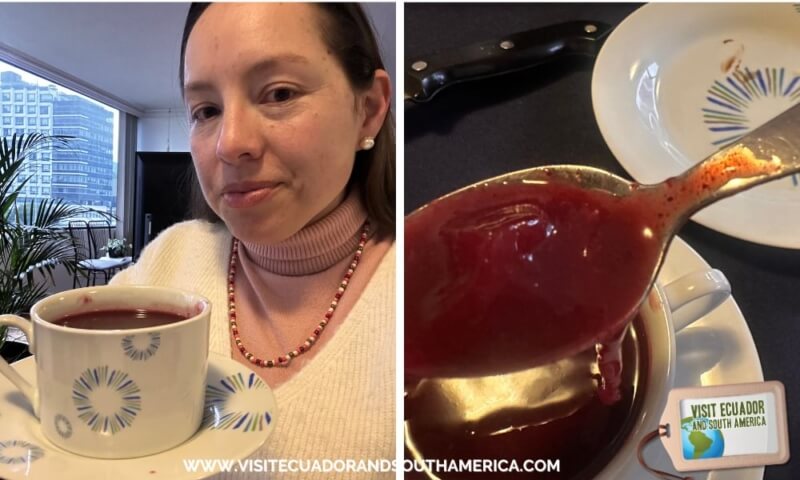
No guagua de pan experience is truly complete without the companion drink: colada morada.
Don’t Stop There—Taste More!
Guaguas de pan and colada morada ara just two of many must-try dishes from Ecuador’s highlands.
While you’re there, be sure to taste humitas, tamales, and locro de papa.
These dishes are rich in history, flavor, and comfort.
We’ve also created a guide to the top 10 traditional food to taste while in Ecuador—you can check it here.
Best Day Tours in and from Ecuador
Want to explore Ecuador beyond the food? Try these top-rated GetYourGuide tours:
Culinary Day Tours You Shouldn’t Miss
Want to experience Ecuador’s food culture first-hand?
These culinary tours in the Andes are unforgettable:
Conclusion
For couples with wanderlust and a taste for authenticity (especially DINKs who love travel & food), this is gold: sharing a sweet, beautifully crafted guagua de pan and a warm glass of colada morada becomes both a culinary indulgence and a cultural moment. The playful shapes and inventive fillings appeal to adventurous palates. The tradition of gathering—whether as family or as travel-partners—is meaningful.
When you visit Ecuador around the start of November, you’ll find bakeries filled with creativity, vibrant shapes, and community spirit. It’s a story worth capturing in your travel blog, and an experience worth sharing on Instagram, Pinterest and beyond: the photo of the bread baby next to the purple drink, the local baker shaping the dough, the happy faces over a shared bite.
Taste, travel, and explore together—Ecuador is full of flavor and fun.
Ready to plan your trip? Let us know which dish is your favorite in the comments below.
Enjoy!
Some posts on this site contain affiliate links, meaning if you book or buy something through one of these links, I may earn a small commission (at no extra cost to you!).
If you enjoy the content, please consider liking, commenting, and subscribing. It’s free, and it helps us. Every little bit will help fund our travels and continue to bring great content to our site!
PIN IT FOR LATER

Don´t just dream it. Make it happen. Plan your South American trip with a local!
Take a look at this list of travel resources to plan your trip and travel in South America.
Daydreaming about your trip to South America? I share with you some useful tips & resources for a memorable trip! Order here your Free Ebook.
I invite you to follow me on Facebook, Twitter, Pinterest, and Instagram. In addition, you can subscribe on YouTube. You can also send me an email to get more information or help planning your trip: info(at) visitecuadorandsouthamerica(dot)com.